
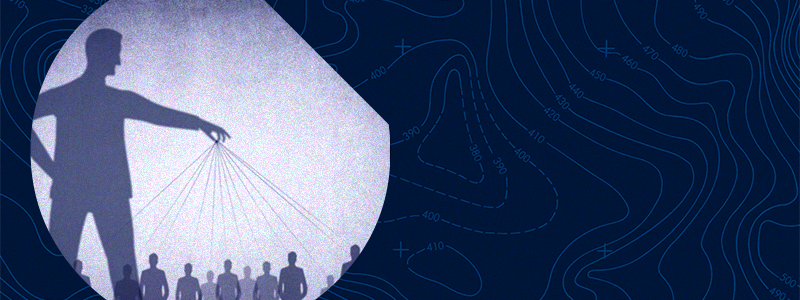
Why do we hear so much about Propaganda?
When Moldova’s Intelligence and Security Service blocked Russian news outlets across the country, the Russian response was not a surprise…
“This is a flagrant infringement by Moldovan authorities of freedom of speech and the rights of its own citizens to have access to information in Russian.”
Coming from one of the most repressive states in the world, it’s not unexpected that the Russian Foreign Ministry would try to present their criticism through the lens of protecting ‘freedom of speech.’
But in Moldova, the fundamentals of freedom of speech are protected through the Code of Ethics of Journalists in the Republic of Moldova.
There are some key points:
“The professional activity of the journalist is incompatible with the dissemination of messages prohibited by law (speech inciting hatred, homophobia, anti-Semitism, discrimination, etc.) as well as with the activity of political, religious propaganda and electoral agitation.”
This last line… political, religious propaganda and electoral agitation… is where these Russian channels have failed.
Recently, Telegram channels linked to these disbarred broadcasters have been shut down across the country.
In response, sympathetic accounts echoing the same voices, those claiming to defend freedom of expression and freedom of speech, are again shrieking through our social channels
What is Propaganda?
We’ve all heard people use the term “propaganda” – whether it’s politicians on TV, or commentators online – but how many of us actually know what it means?
The French author Victor Hugo once said
“We can resist the invasion of armies, but we cannot resist against an invasion of ideas”
And that’s what Propaganda is. A coordinated use of ideas, messages and narratives to achieve a political end goal.
And that goal is to make populations think, feel or behave a certain way…
Is Propaganda bad?
Some propaganda can be useful. If Russia Today were to announce a new Russian president, then you can be almost entirely sure it will be accurately conveying that information… but when it crosses that line into dishonesty and manipulation, propaganda platforms like this can be very harmful to societies.
In the 1960’s, a philosopher called Jurgen Habermas posed a radical idea – a healthy democracy needs a healthy “public sphere”, a place where ideas can be exchanged and debated freely. But in order to be healthy, there needs to be an even playing field, where every story gets a fair chance and consumers can weigh up the information to make their own decisions.
So… When the most powerful voices are able to shout down and drown out the competition, they can use that unfair influence to push whatever narrative they want – regardless of whether or not it is true or serves anyone’s interest but their own.
And this, it is argued, makes for an unhealthy public sphere, where propaganda can have a deeply harmful effect.
How is Propaganda being used?
Some state-backed media platforms have both the money and the political drive to promote misleading narratives, in the interests of the people funding them.
When we think about companies like RT which are known for spreading a false, pro-Russian narrative about the war in Ukraine and even events inside Moldova itself, we need to think about the effects this can have, not just on each of us as individuals, but also on how the very heart of our democratic institutions function.
Can it still affect me if I know it’s Propaganda?
The truth is, the sheer scale and output of some of these channels makes it difficult to know how much we are influenced by this invasion of ideas.
The Mere Exposure Effect, was a term created by psychologist Robert Zajonc in 1968 to explain how and why we are influenced by advertising. His study showed that repeated messages can lead to increased ‘liking’ and ‘acceptance’ of certain images or messages, due to the comfort and familiarity they bring.
So if an advertiser simply puts their message and brand in front of us enough times, eventually we all accept it and start to choose it.
And this advertising technique is true for propaganda too. Even if you are aware of a message being Propaganda, when it’s repeated enough times, you will start to believe it.
Why is it so important to understand Propaganda, and how can I protect myself?
Understanding what propaganda looks like, who’s behind the story, what they’re trying to make us think and feel – and why – allows each of us to make an informed judgement on who we can trust, what we should believe and how to let this affect us.
So whenever you see news that makes you question its purpose, remember the invasion of ideas… and defend yourself against Propaganda.
You must be logged in to post a comment.